I’m a naturally curious person, and I really like to learn new things. I’m also prone to going down a rabbit hole (or two).
Because so many different things interest me, I found it really difficult to keep track of what I was learning. Rather than remembering anything, I ended up with a phone full of screenshots and a notes app that was bursting at the seams and almost impossible to navigate.
If this sounds like you, I want to introduce you to the Commonplace Book!
A Commonplace Book, or Commonplace Journal, gives all of those scattered pieces a home.
Instead of leaving your ideas in different notebooks, apps, or sticky notes, a Commonplace Book gives you one place to collect and curate information that inspires you, whatever that may be. It isn’t about recording every detail of your day (like a traditional diary). Instead, your entries may focus on books that you’ve read, questions you’ve asked, or even just ideas that you’ve pondered.
In this guide, I’ll walk you through the basics you need to know to start your own Commonplace Book, including what they are, why they’re worth keeping, things you can include, and practical tips for creating a system that actually works for you.
Table of Contents
- What Is a Commonplace Book?
- A Very Brief History of Commonplace Books
- Why Keep a Commonplace Book?
- What Can You Put Inside?
- Different Ways to Organize Your Commonplace Book
- How to Write Your First Entry
- Frequently Asked Questions
- Ready to Start?
- Additional Resources
- My Favorite Supplies
- Final Thoughts
Affiliate Link Disclosure
This post may contain affiliate links. This means I may earn a small commission if you choose to purchase through my links, at no extra cost to you. I only share products I genuinely love or think you’ll enjoy.
What is a Commonplace Book?
Before search engines, note apps, or digital databases, people kept Commonplace Books, sometimes called Commonplace Journals.
A Commonplace Book is a personal, curated collection of information, ideas, observations, media, or any other inspiration that you may encounter in your life. It is not exactly a diary, which records your experiences and events on a daily basis; instead, a Commonplace Book focuses on things that you want to reflect on, remember, or revisit in the future. It can be used to collect everything from your favorite quotations from the book you’re reading to recipes you’re saving. Anything that sparks your curiosity can be included!
If you’re looking for more specific printable templates and guided examples, check out The Blooming Reverie Commonplace Book Kit, which includes beginner-friendly templates, educational resources, and over 100 deep-dive topic ideas to help you get started.
A Very Brief History of Commonplace Books
Most people agree that Commonplace Books probably originated in ancient Greece and Rome, where scholars and philosophers would collect notable sayings and passages for further study or reference. Eventually, during the Renaissance, Commonplace Books evolved into a way for learners to record new information, make connections among texts, and build their overall knowledge across topics. In more recent times, one of the most prominent advocates for the Commonplace Book was John Locke, who even developed his own organizational system that was later adopted by others.
Historically, Commonplace Books held a wide variety of materials, including quotations, proverbs, poems, recipes, scientific observations, and personal reflections. Each person’s Commonplace Book was unique, however, reflecting their own interests and learning.
Why Keep a Commonplace Book?
I’ve found that Commonplace Journaling has greatly impacted my daily life and has quickly become one of my favorite types of journaling. Some things that I really enjoy about my Commonplace Book are:
#1–It Preserves Inspiration
I don’t always have the best memory, so having a physical record of information that has inspired me has been very impactful. I can revisit ideas later and engage with them in new ways.
#2–It Sparks Creativity
I use my Commonplace Book for writing inspiration, blog ideas, and craft inspiration because it lets me see how different ideas percolating in my brain naturally connect.
#3–It Encourages Slower Consumption
Because this is an analog option, it encourages a slower pace when rereading quotes and reflecting on information. Rather than mindlessly scrolling, I can engage more deeply with the books and other media I consume.
#4–It Helps You Understand Yourself
Commonplace Journaling has allowed me to see different patterns in myself as they emerge over time. I can see my interests and values in a visible format.
What Can You Put Inside?
There are tons of different things that you can include in a Commonplace Book, and there is no wrong way to do it. If you need some guidance, here are a few things that I have included in my own Commonplace Book.
Quotes & Passages (With or Without Reflections)
I love to include quotes from the books I’m reading or even lines or verses of poems. I like to record the actual quotes as well as my reflections and thoughts on those excerpts. It helps me remember meaningful parts of what I’m reading as well as the thoughts I’ve had while reading.
I ask myself: “What made me stop and think?” or “What passage stands out to me?” These questions serve as a starting point for meaningful reflections.
Personal Observations
Sometimes I will record things from my daily life. It might be specific moments or even just random thoughts I’ve had throughout the day. Unlike a traditional diary, though, I don’t record every single thing that happens during the day. Instead, I pick out specific, significant moments that represent something larger.
Research and Deep Dives
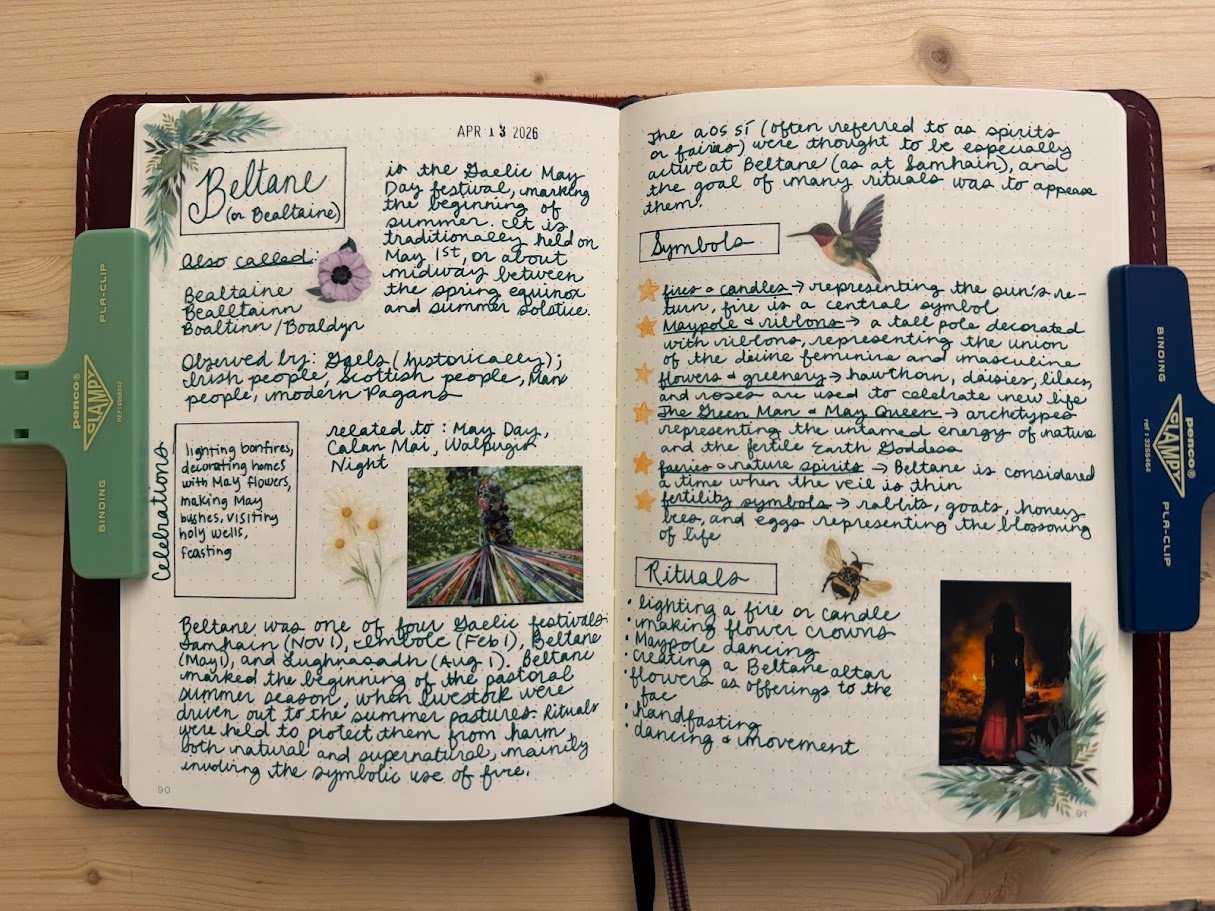
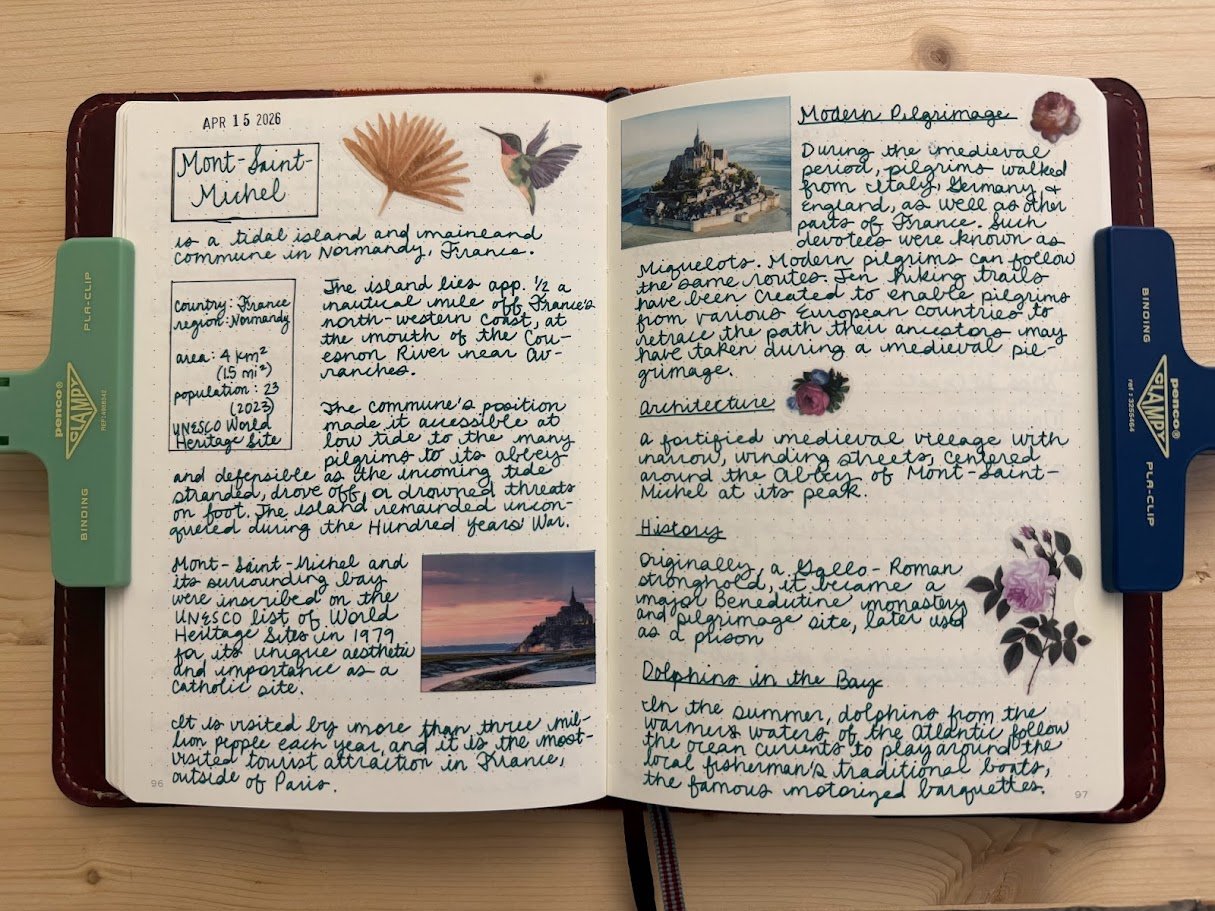
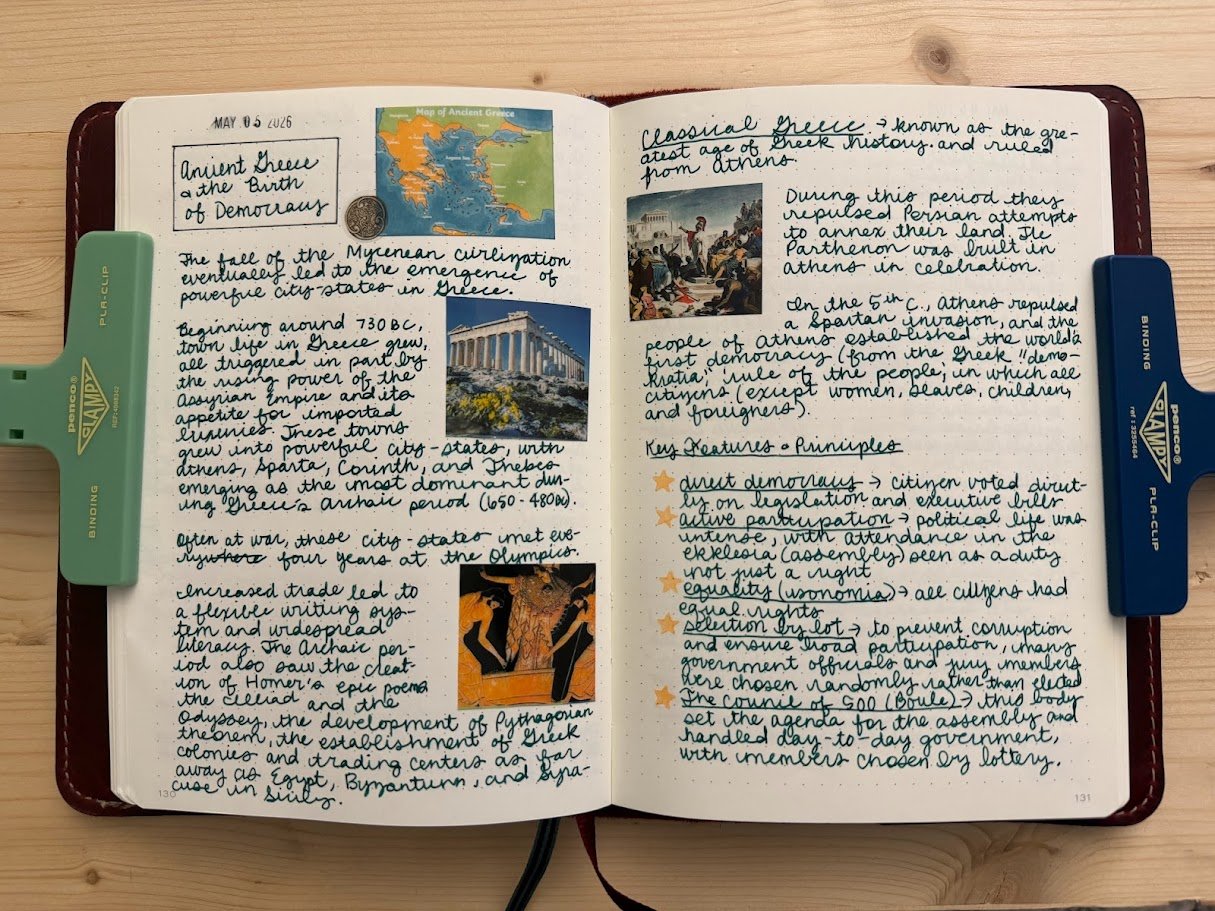
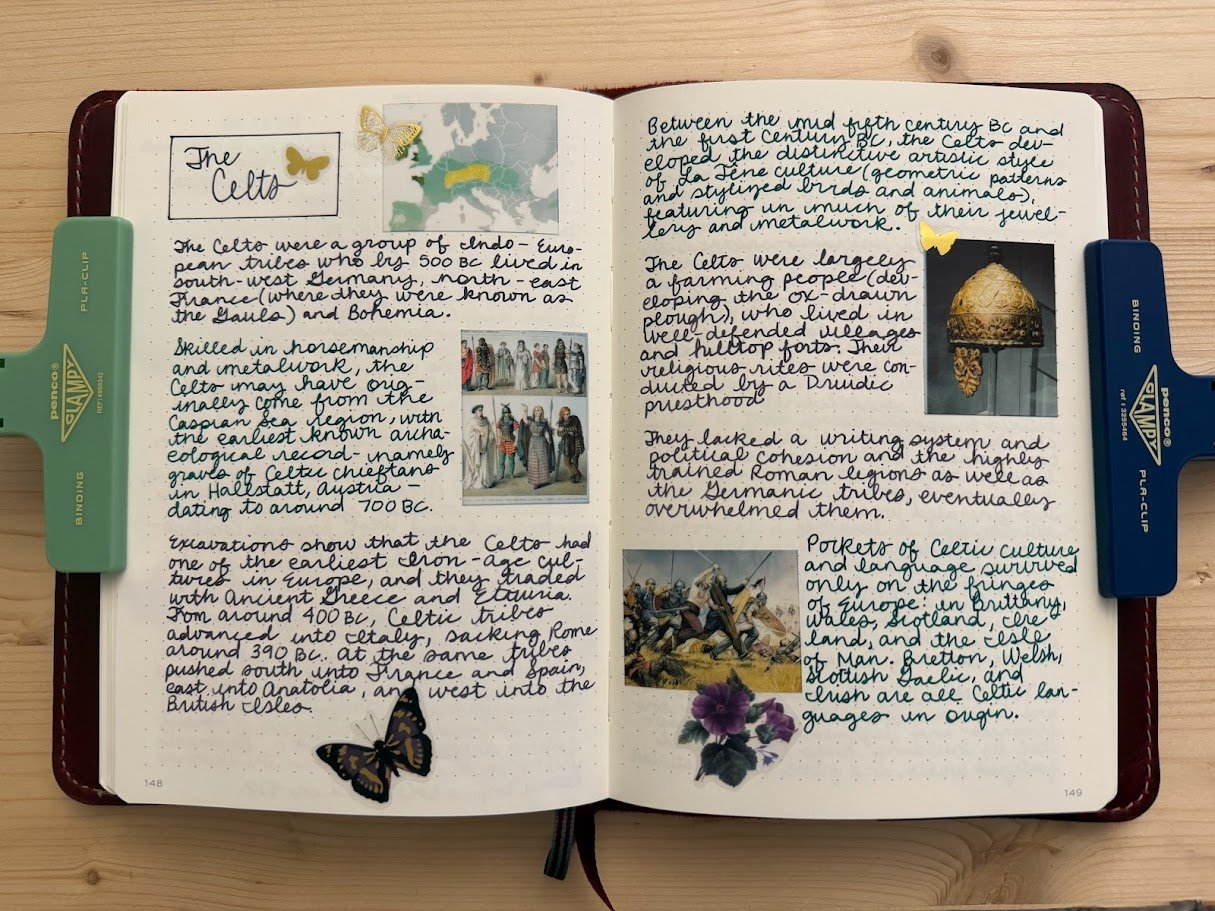
This is my favorite type of entry because I love learning new information. I like to do a deep dive on any random topic that has grabbed my attention or sparked my interest throughout the day. You can deep dive into any topic of your choosing.
Collections & Lists
I also have a lot of ongoing lists, just to keep ideas fresh in my mind. I have a list of favorite words, songs to listen to when I’m sad, seasonal bucket lists, and game recommendations. Again, I have a terrible memory, so the lists help me keep track of what’s important to me.
Different Ways to Organize Your Commonplace Book
I like to keep my Commonplace Book completely freeform because I feel it reflects how my interests fluctuate and flow, but others prefer themed sections or an index. There is no wrong way to organize it; it is completely your preference.
Categorized/Topical
This is the method that is probably most commonly associated with traditional commonplace books. You create sections by topic and place new entries in the appropriate categories.
Chronological
For this method, instead of organizing by topic, you simply record entries in the order you encounter them.
Chronological with an Index (The Locke Method)
This method combines chronological organization with a helpful index. Basically, you still record entries as you encounter them, which feels very organic, but then you create an index (at the front or back), either as you go or after filling up the entire journal.
Three-Ring Binder with Dividers
This approach is similar to the categorized/topical method, except you use a binder with dividers. Each of your categories or sections gets its own divider, and you can continually add pages wherever needed.
Index Card System
With this method, each note gets its own card, and the cards can be sorted, rearranged, and grouped in different ways.
Disc-Bound Notebook System
This method uses a disc-bound notebook system with removable pages. Pages can then be added, removed, or rearranged at will.
Digital
This method uses a digital platform (such as Notion or OneNote) rather than paper. You can organize in many different ways using folders, tags, links, or even databases.
How to Write Your First Entry
I suggest starting small with one quote or song lyric, one idea, or even just one observation. If you want to do a deep dive, don’t start with a monster of a topic. Instead of researching everything about the entire Roman Empire, for example, maybe start with one specific aspect.
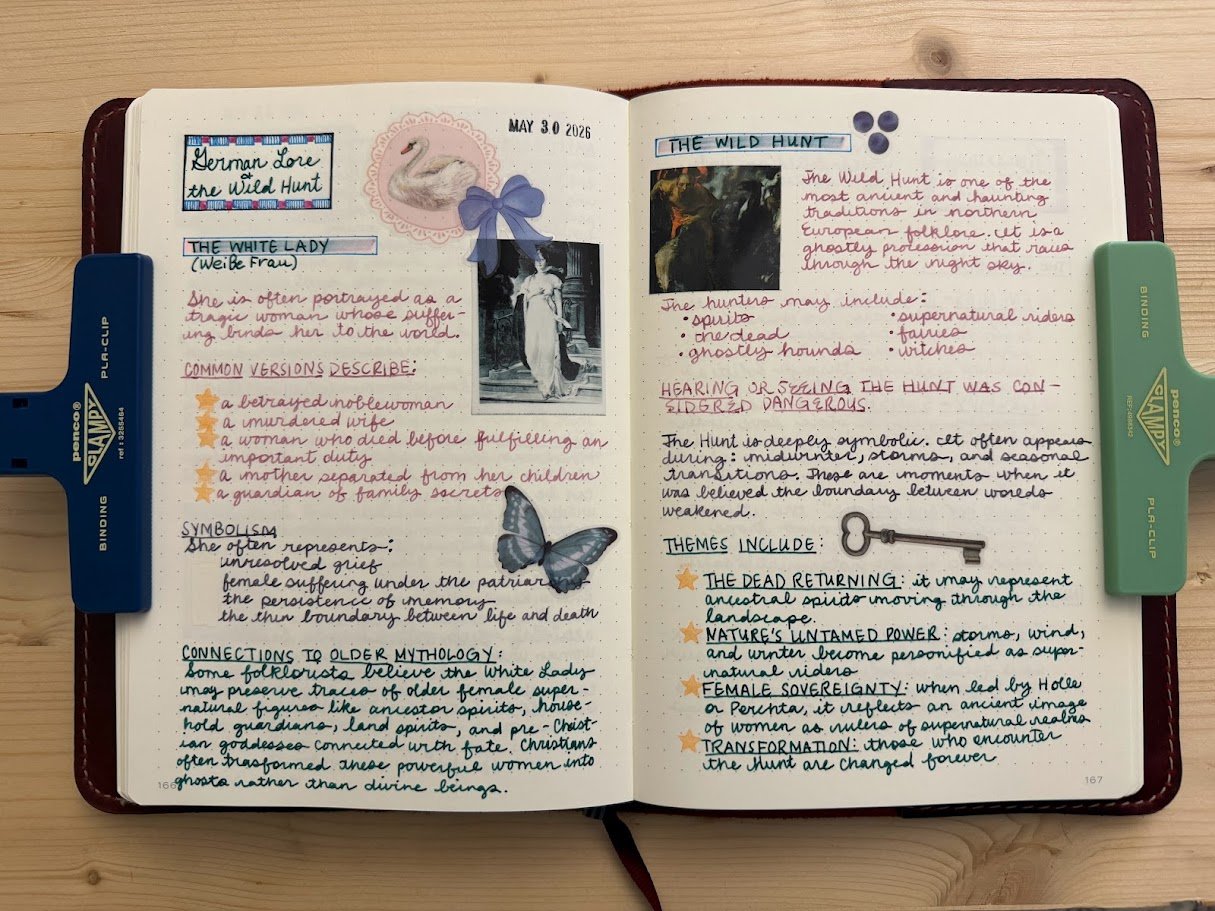
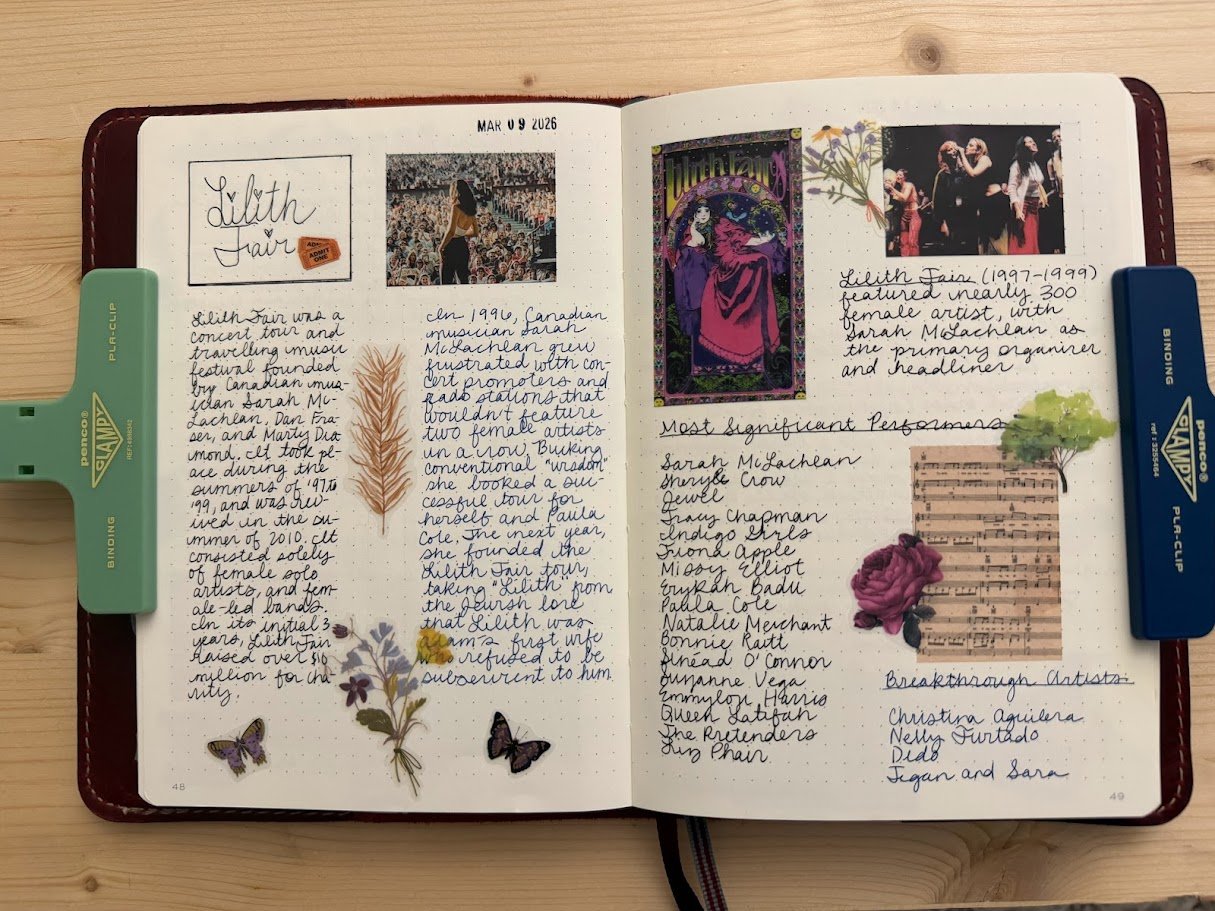
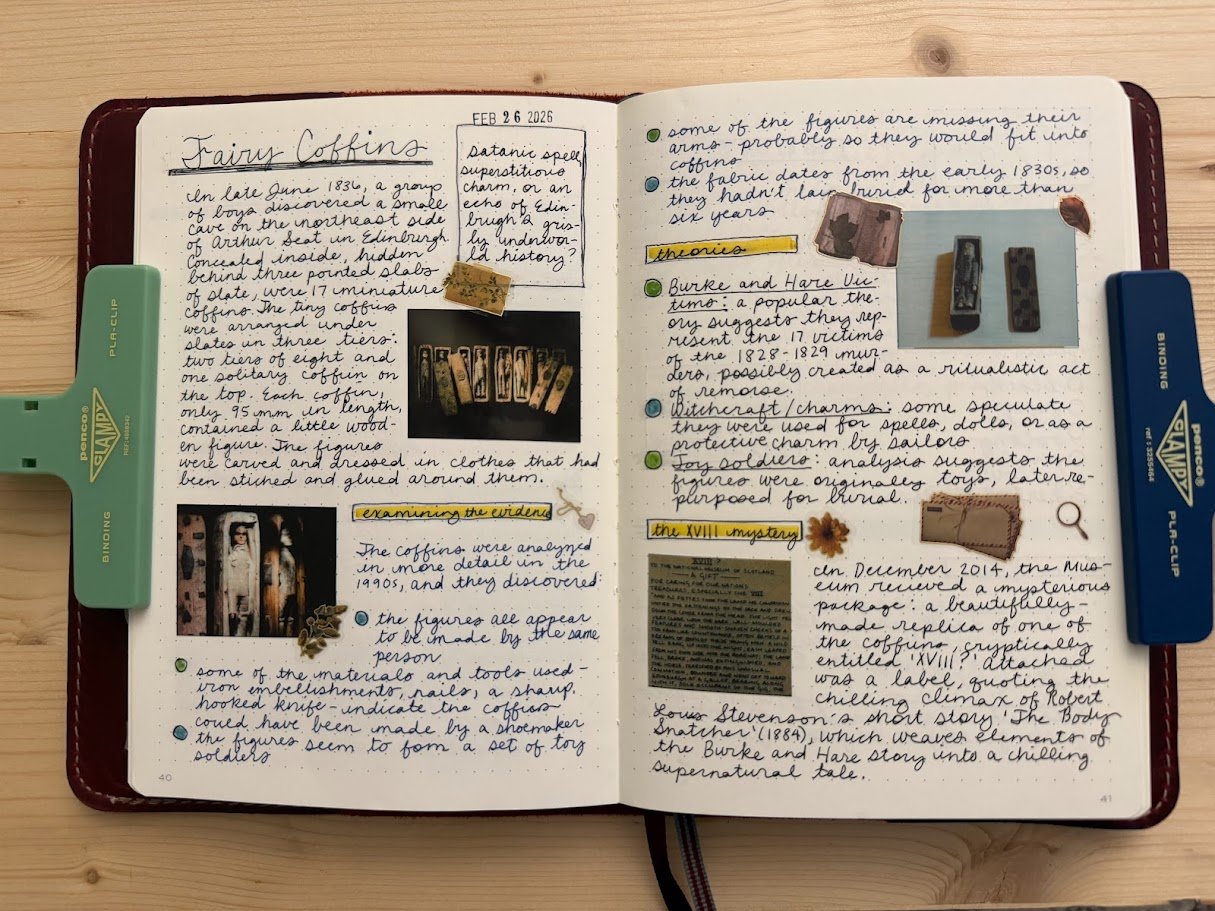
Here are some examples from my own Commonplace Book:
Frequently Asked Questions
- Do I need a specific notebook or journal to get started?
- Absolutely not! A Commonplace Book can be kept in any notebook (or digital platform) that you enjoy using.
- Can I keep a digital Commonplace Book?
- Definitely, yes. Many people use apps like Notion, OneNote, or Apple Notes to collect ideas digitally.
- How is a Commonplace Book different from a journal or diary?
- A traditional diary focuses on your daily life and experiences. A Commonplace Book focuses on ideas and information that inspire you. It could include quotes, research, poetry, observations, etc.
- Do I need to organize everything before I start?
- No, not at all. There are different organization methods that make things easier, but the most important thing is just to get started. Your own system will evolve as you go!
- Should I keep an index?
- Keeping an index can be helpful if you plan to include a lot of information and research in your Commonplace Book, but it isn’t a requirement. Personally, I keep my journal chronologically, and I go back and add the index when I have filled up the entire journal.
- How often should I write in my Commonplace Book?
- It varies. Some weeks you may have several entries, whereas other weeks you don’t add anything. I wouldn’t worry as much about the number of entries as I would about the quality of entries.
- Can I include drawings, photos, or other creative elements?
- Yes! It absolutely does not have to be entirely written. I like to include printed photos, stickers, maps, tickets, magazine clippings, and anything else that inspires me and fits the vibe.
- Is it okay to have more than one Commonplace Book?
- Again, yes! Many people have different Commonplace Books for different topics, especially as their interests grow.
- Where can I find ideas for my Commonplace Book?
- Everywhere! Some of my favorite sources are books and music, documentaries, podcasts, museums and galleries, and random deep dives. Anything that makes you curious and want to know more can be included!
Ready to Start?
It’s okay if you’re feeling a little overwhelmed!
That’s exactly why I created The Blooming Reverie Commonplace Book Kit.
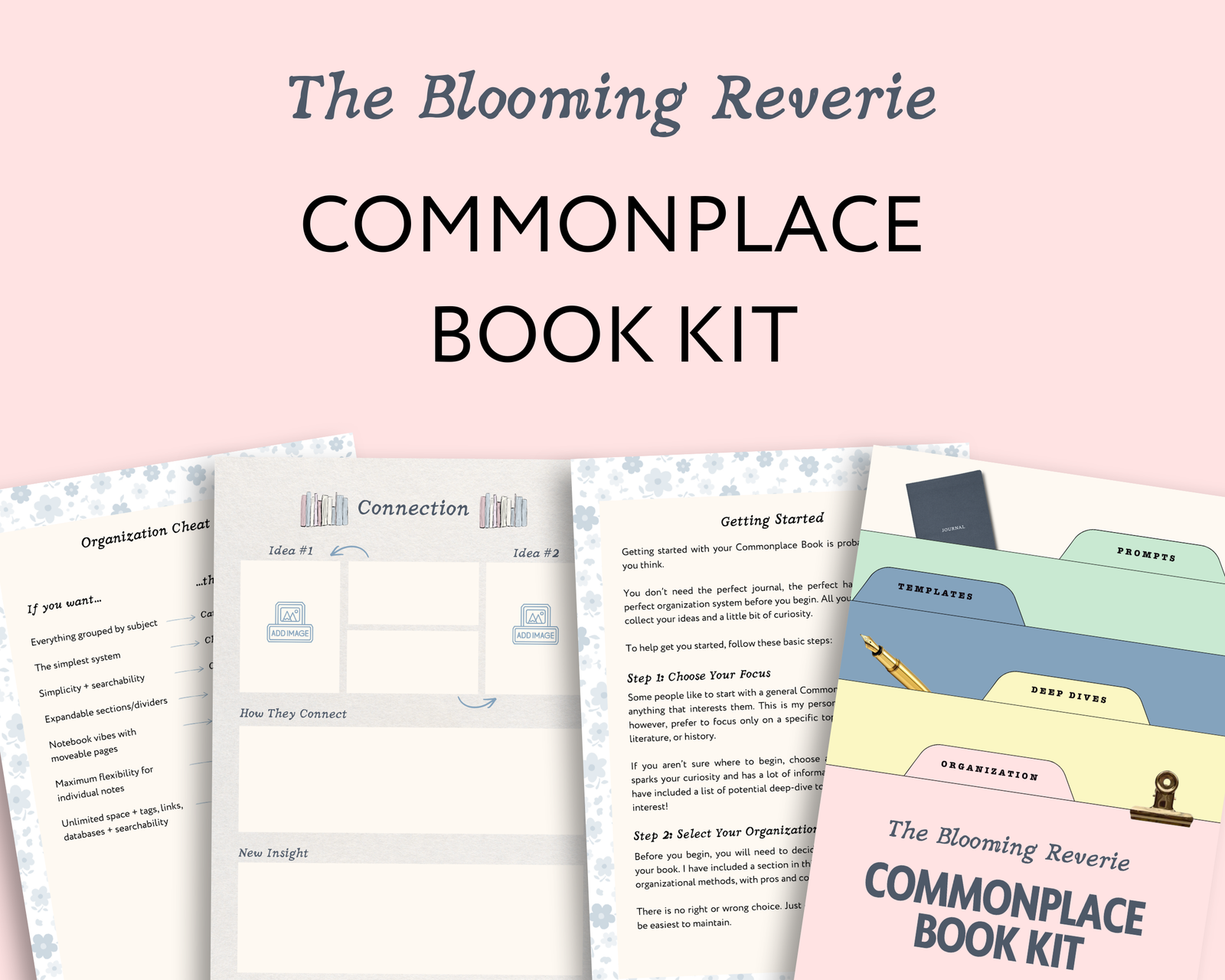
It’s more than just a printable journal. This starter kit teaches you how to build and maintain your own Commonplace Book while providing helpful information, reusable templates, and other printables.
Some things you’ll find inside:
- Getting Started Guide
- Organization Options & Cheat Sheet
- Deep Dive Topics Library (100 topics)
- How to Use the Templates
- US Letter Templates
- A5 Templates
- Reflection Prompts
- Index Pages
So whether you’re starting your first entry or just looking for some fresh inspiration, The Blooming Reverie Commonplace Kit is there to help you begin with confidence!
Additional Resources:
Continue exploring with some of my other posts:
- 36 Commonplace Book Ideas & Deep Dive Topics to Journal About
- 20 Reading Journal Prompts for Any Novel
- My Journal Ecosystem: How I Use Multiple Journals to Organize My Life
- How to Start a Junk Journal: A Beginner’s Guide
- 50 Journaling Prompts for Self-Discovery and Slow Living
- How to Start Journaling When You Don’t Know What to Write
My Favorite Supplies:
Are these things necessary? Absolutely not. But do I love all of them? Yes, yes I do:
- Soolla Studio Bag & Pouch
- Canon Ivy 2 Mini Photo Printer (and paper!)
- Pilot Fountain Pen Ink (in Take-Sumi)
- Pilot Kakuno Fountain Pen (great for beginners!) & ink cartridges
- Dotted Hardcover Journal (120 gsm)
- Metal Journal Stencils
- Self-Inking Date Stamp
Final Thoughts
Your Commonplace Book is more than a journal. It is a record of the curiosities, interests, questions, and ideas that have shaped the way you think. Don’t worry about perfection or making every page beautiful. The value of your Commonplace Book comes from the thought put into it, not in the perfect organization or aesthetic layouts.
Curate information and ideas that inspire you, and make deeper connections among them. Give yourself permission to dive into those rabbit holes; you never know what you might learn or discover.




What a wonderful introduction to the world of commonplace books! This guide beautifully highlights how a commonplace book can become a personal collection of ideas, quotes, reflections, and discoveries that inspire lifelong learning and creativity. Rather than focusing on perfection, it encourages readers to build a meaningful habit of capturing knowledge that resonates with them. Whether you’re a writer, student, avid reader, or simply someone who enjoys preserving memorable thoughts, this is an inspiring resource for starting a notebook that grows alongside your interests. Thanks for sharing such a thoughtful and motivating guide!
Thank you so much! I’m really glad that you enjoyed it!