
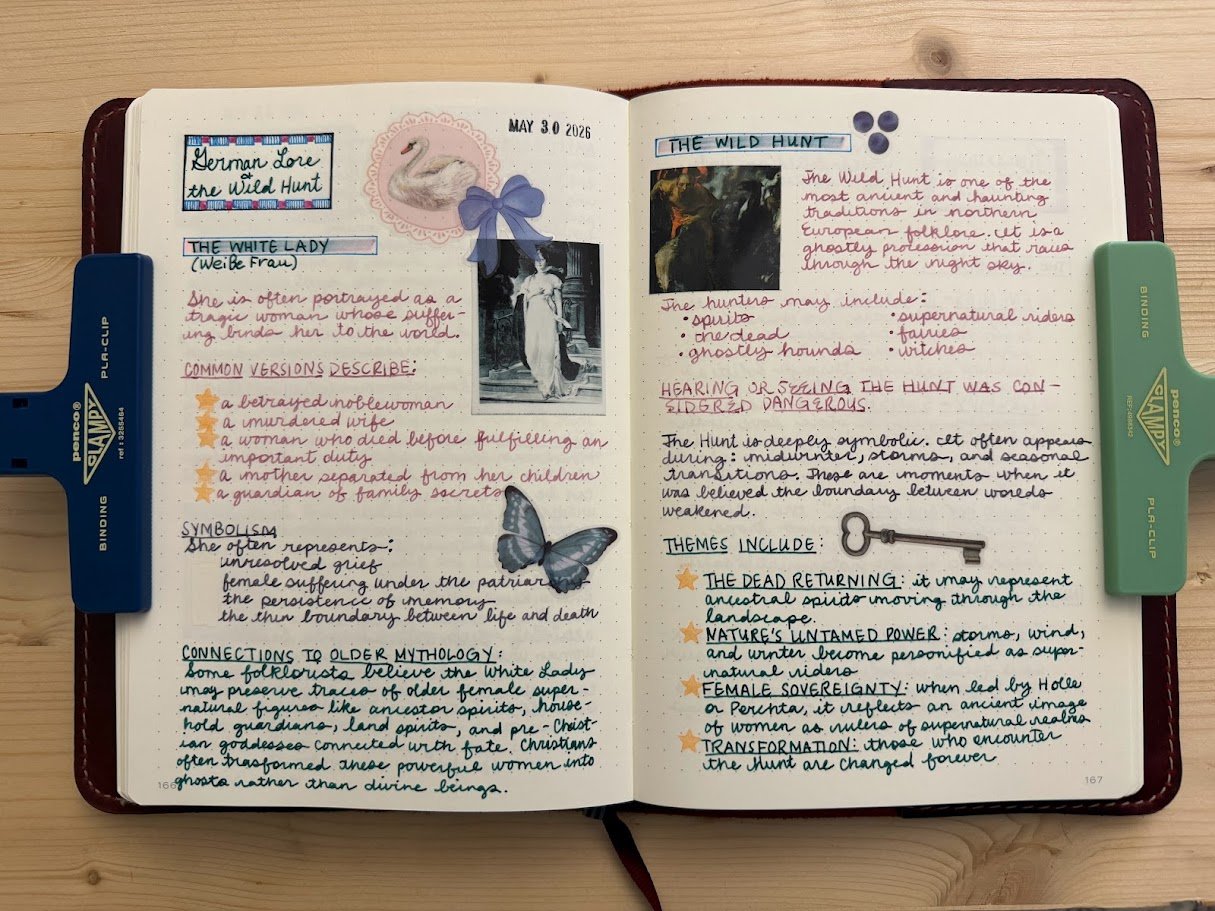
Generally, I’m a curious person, and I never know where my interests will take me. I love learning and collecting random bits of information, storing them away for a rainy day.
However, I started to realize that I really wasn’t retaining much of the information I was learning or following up on my thoughts. I needed a way to keep track of all the deep dives, song lyrics, book passages, recipes, and other ideas.
Rather than having an overwhelming number of screenshots or typing in my Notes app, I wanted a place to keep this information that wasn’t digital. I wanted to create a slower, more intentional relationship with the information I interacted with daily.
To solve this problem, I started keeping a Commonplace Journal, and it has quickly become one of my favorite types of journaling.
Affiliate Link Disclosure
This post may contain affiliate links. This means I may earn a small commission if you choose to purchase through my links, at no extra cost to you. I only share products I genuinely love or think you’ll enjoy.
What is a Commonplace Journal (or Commonplace Book)?
A Commonplace Journal, also known as a Commonplace Book, is basically a centralized collection of ideas, inspiration, and general knowledge that impacts you on any given day. Unlike a traditional journal or diary, however, it functions more like a dumping ground and storage space for meaningful quotes from books, song lyrics, fun trivia, new recipes, or thought-provoking ideas. Any information or ideas that you are engaging with can be included in your Commonplace Journal.
If you want a little more guidance on how to create your own Commonplace Book, check out my Commonplace Book Kit on Etsy! More than just a printable journal, this comprehensive starter kit teaches you how to build and maintain your own Commonplace Book while providing reusable templates, educational resources, and inspiration for years to come.
History of the Commonplace Book
The practice of keeping a Commonplace Book originated in classical Greece and Rome, where philosophers such as Seneca and Marcus Aurelius kept books to record quotes and observations for later debates and speeches. The Greeks called these topics (topoi), whereas the Romans referred to them as loci, which is Latin for “commonplaces.”
Commonplacing was formalized by philosophers such as John Milton and John Locke, who developed more complex indexing systems to locate information in their notes more easily. Throughout the next several centuries, famous writers and thinkers like Ralph Waldo Emerson and Virginia Woolf (one of my personal favorites!) relied on them to gather and organize source materials for their own writing.
Today, a Commonplace Journal functions as a creative, reflective space where you can keep track of any information that you find meaningful or important. It is a deeply personal practice, so there really isn’t a wrong way to do it. However, I would avoid treating it as a traditional diary or trying to create a perfectly organized system. Your Commonplace Journal should be an organic, evolving space for capturing what interests you.
Why Commonplace Journaling Feels so Meaningful
I’ve found that Commonplace Journaling has greatly impacted my daily life and has quickly become one of my favorite types of journaling. Some things that I really enjoy about my Commonplace Journal are:
#1–It Preserves Inspiration
I don’t always have the best memory, so having a physical record of information that has inspired me has been very impactful. I can revisit ideas later and engage with them in new ways.
#2–It Sparks Creativity
I use my Commonplace Journal for writing inspiration, blog ideas, and craft inspiration because it lets me see how different ideas percolating in my brain naturally connect.
#3–It Encourages Slower Consumption
Because this is an analog option, it encourages a slower pace when rereading quotes and reflecting on information. Rather than mindlessly scrolling, I can engage more deeply with the books and other media I consume.
#4–It Helps You Understand Yourself
Commonplace Journaling has allowed me to see different patterns in myself as they emerge over time. I can see my interests and values in a visible format.
What You Can Include in a Commonplace Journal
There are tons of different things that you can include in a Commonplace Journal, and there is no wrong way to do it. If you need some guidance, here are a few things that I have included in my own Commonplace Journal.
Quotes & Passages (With or Without Reflections)
I love to include quotes from the books I’m reading or even lines or verses of poems. I like to record the actual quotes as well as my reflections and thoughts on those excerpts. It helps me remember meaningful parts of what I’m reading as well as the thoughts I’ve had while reading.
I ask myself: “What made me stop and think?” or “What passage stands out to me?” These questions serve as a starting point for meaningful reflections.
Personal Observations
Sometimes I will record things from my daily life. It might be specific moments or even just random thoughts I’ve had throughout the day. Unlike a traditional diary, though, I don’t record every single thing that happens during the day. Instead, I pick out specific, significant moments that represent something larger.
Research and Deep Dives
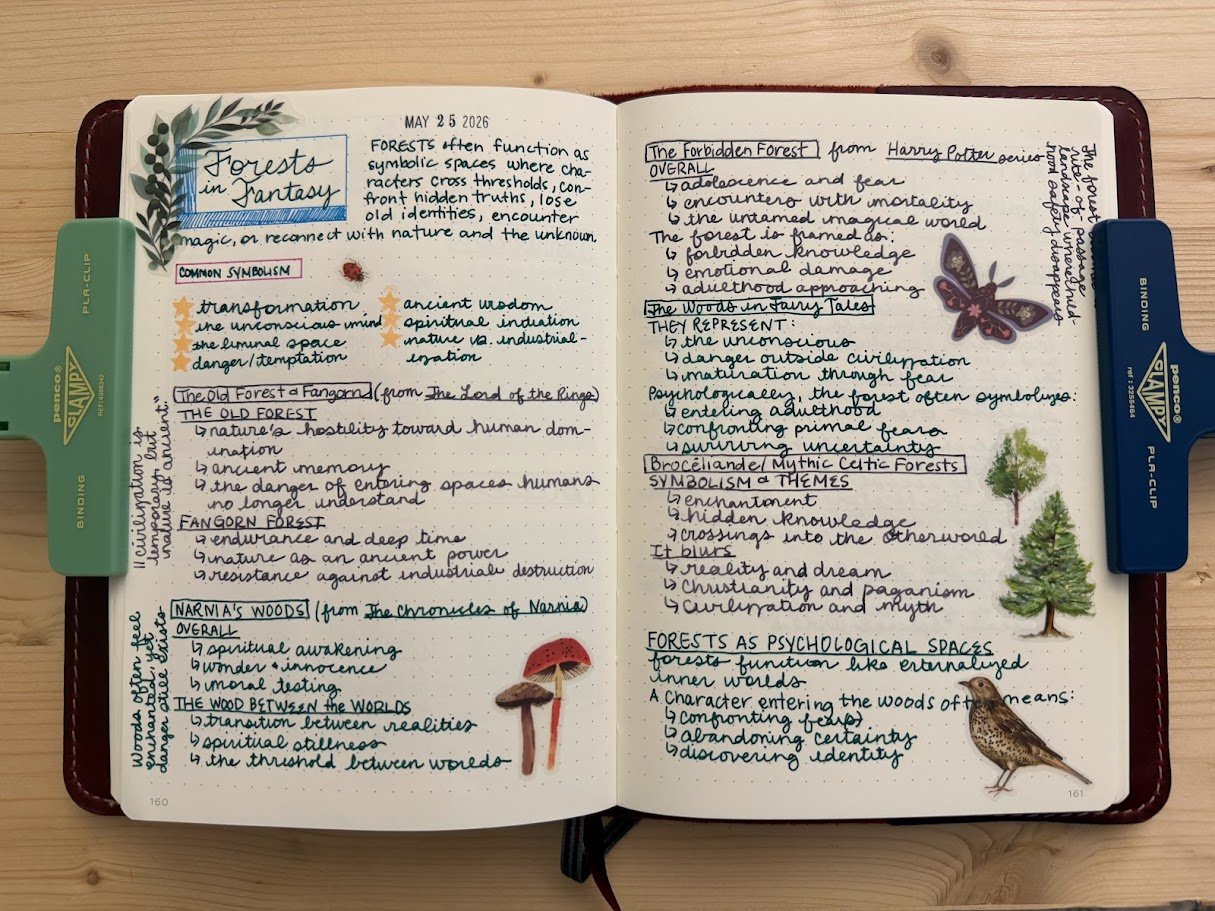
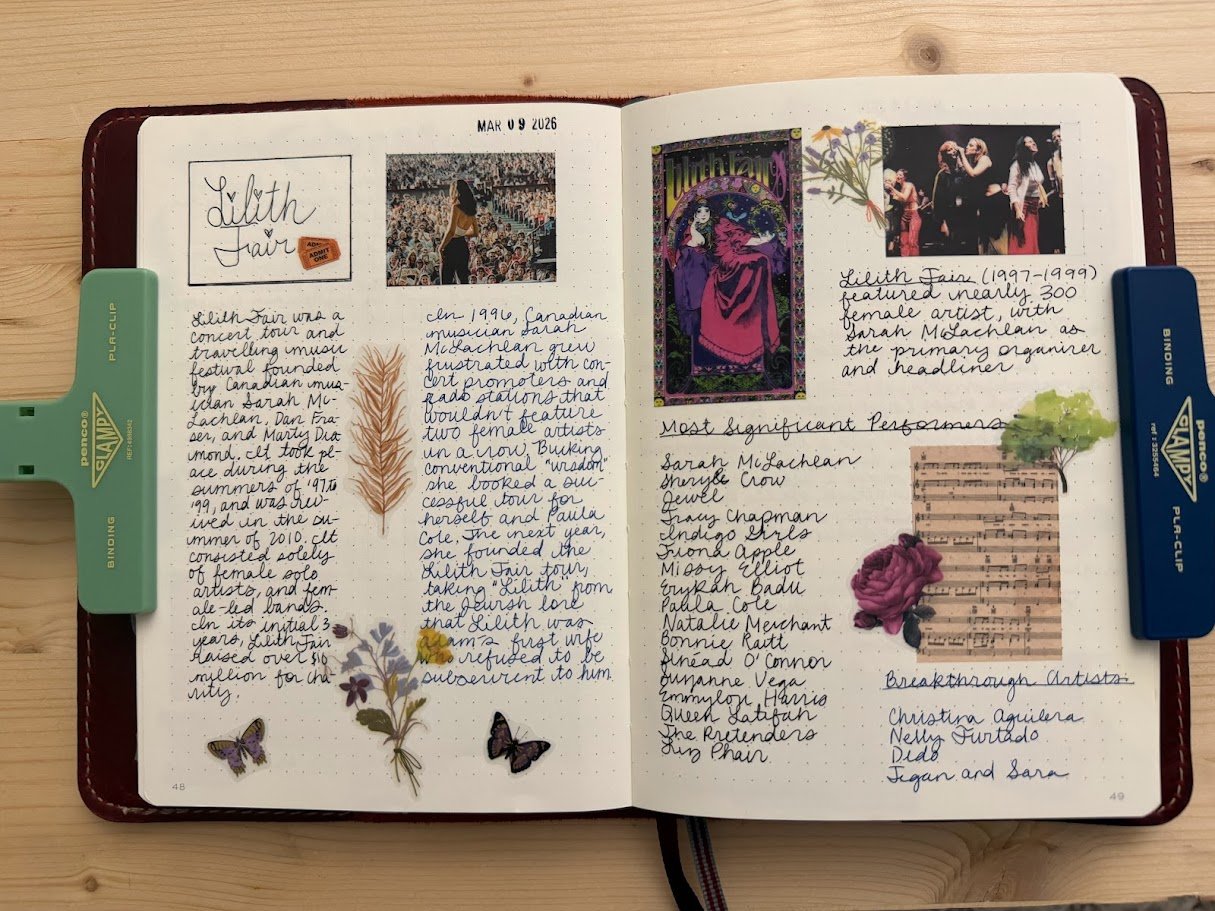
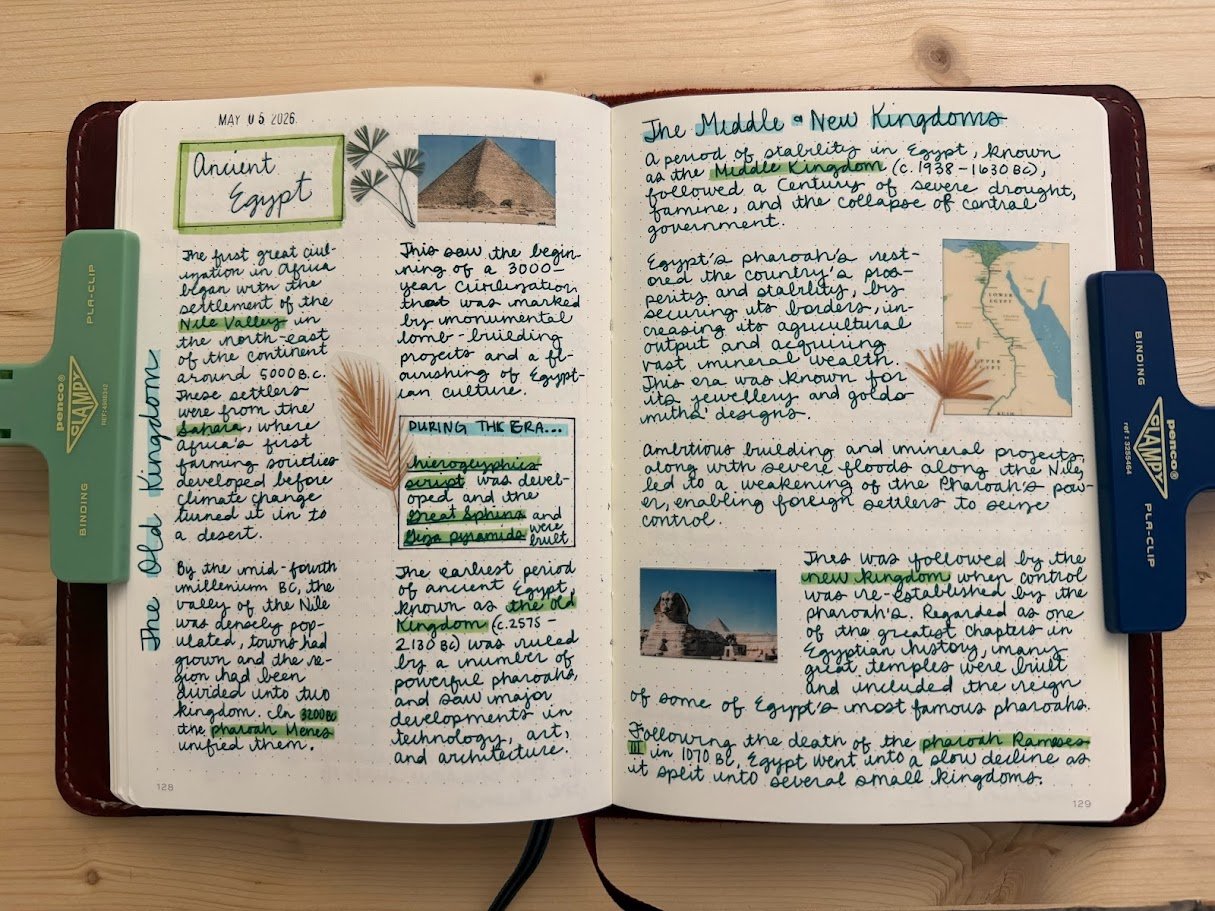
This is my favorite type of entry because I love learning new information. I like to do a deep dive on any random topic that has grabbed my attention or sparked my interest throughout the day. You can deep dive into any topic of your choosing. Here are some topics that I’ve researched:
- Imbolc
- Tintagel Castle
- Tarot
- Bill of Rights
- Stonehenge
- Posy Rings
- Fairy Coffins
- Lilith Fair
- House of Romanov
- The Holy Roman Empire
- Dependent Origination
- Amsterdam
- Keening
- Alexander the Great
- The Celts
Collections & Lists
I also have a lot of ongoing lists, just to keep ideas fresh in my mind. I have a list of favorite words, songs to listen to when I’m sad, seasonal bucket lists, and game recommendations. Again, I have a terrible memory, so the lists help me keep track of things that are important to me.
How to Start a Commonplace Journal
Step 1: Choose a journal
I like to use a dotted journal because it gives me more freedom than lines, but I am still able to keep it more aesthetically pleasing than if I had a completely blank journal. I also love writing with my favorite fountain pens and including pictures that I print with my mini printer (don’t forget the paper!). It makes a huge difference visually to have images on my pages!
Step 2: Decide How Structured You Want It to Be
I like to keep my Commonplace Journal completely freeform because I feel it reflects how my interests fluctuate and flow, but others prefer themed sections or an index. There is no wrong way to organize it; it is completely your preference.
Step 3: Start Small
I suggest starting small with one quote or song lyric, one idea, or even just one observation. If you want to do a deep dive, don’t start with a monster of a topic. Instead of deep-diving into the entire Roman Empire, for example, maybe start with one specific aspect.
Step 4: Let It Evolve
Your preferred method and style will evolve, so be flexible, especially as you fill your first journal. Remember, there is no such thing as perfection, so just have fun with it.
Final Thoughts
Don’t wait for “important” ideas to present themselves. It doesn’t have to be perfect. Instead, collect ideas imperfectly, as they come to you. Revisit your entries and take time to reflect on all of the cool things you’ve learned. Finally, this is supposed to be fun (not homework!) so make sure you are enjoying the process.